





Film Festivals
Bedford Park Review: A Quietly Powerful Meditation on Trauma, Connection, and Healing

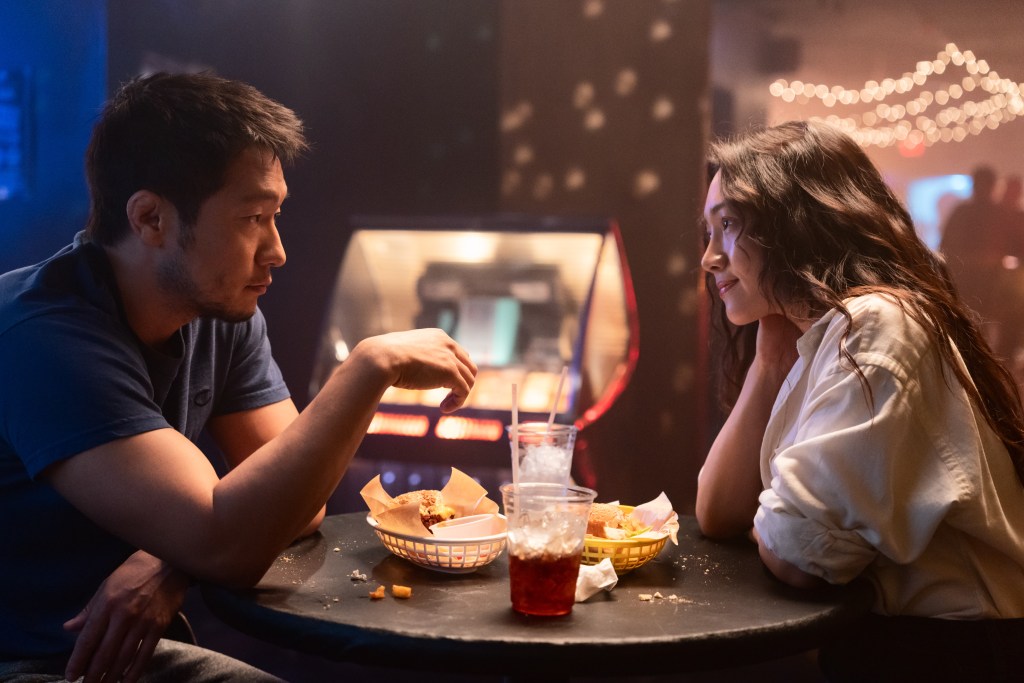
There are films that announce themselves loudly, and then there are films like Bedford Park — stories that arrive gently, patiently, and with an emotional honesty that slowly settles into your bones. Following its world premiere at the 2026 Sundance Film Festival, writer-director Stephanie Ahn’s feature debut stands as one of the most quietly affecting films I experienced at this year’s festival.
I had the opportunity to attend the press line prior to the world premiere, speaking with members of the cast and creative team before stepping into the screening itself. By the time the lights went down and the film began, there was already a palpable sense that Bedford Park was aiming for something deeply personal — not spectacle, not melodrama, but truth.
Set against the emotional weight of unresolved childhood trauma, the film follows Audrey, a Korean American woman in her 30s who is forced to confront her past after her mother is involved in a car accident. That event brings her back into the orbit of both her family and Eli, the man responsible for the accident — a meeting that becomes the unlikely catalyst for connection, understanding, and emotional reckoning.
What Bedford Park does exceptionally well is resist the urge to simplify pain. Audrey and Eli are not characters defined by easy redemption arcs or tidy emotional breakthroughs. Instead, the film allows them to exist in contradiction — carrying guilt, resentment, longing, and hope all at once. Their relationship unfolds not as a traditional romance, but as something far more fragile and human: two people recognizing themselves in each other’s wounds.
Moon Choi delivers a deeply layered performance as Audrey, grounding the film with restraint and emotional precision. Much of her work happens in silence — in glances, pauses, and moments where words would feel dishonest. Son Suk-ku is equally compelling, portraying Eli with a quiet vulnerability that never seeks sympathy but earns it naturally. Together, their chemistry feels organic, built not on grand declarations but on shared understanding.
Stephanie Ahn’s direction is remarkably confident for a feature debut. She allows scenes to breathe, trusting the audience to sit with discomfort rather than rushing toward resolution. Her screenplay thoughtfully explores generational trauma, immigrant identity, and the cultural weight of han — that deeply rooted sense of grief, endurance, and emotional inheritance that lingers across generations. These themes are never spelled out explicitly; instead, they surface through behavior, family dynamics, and the spaces between conversations.
Visually, the film mirrors its emotional tone. The cinematography favors intimacy over polish, often placing the audience uncomfortably close to the characters — not to invade them, but to understand them. There’s a naturalism here that enhances the story rather than distracting from it, reinforcing the idea that healing doesn’t arrive dramatically, but gradually.
What struck me most after the screening was how Bedford Park lingered. This is not a film designed to elicit immediate applause or viral reactions. It’s the kind of story that quietly follows you out of the theater, replaying moments in your mind — conversations unsaid, emotions suppressed, relationships left unresolved. It invites reflection rather than demanding reaction.
In a festival environment often dominated by bold concepts and high-concept storytelling, Bedford Park distinguishes itself through sincerity. It reminds us that some of the most powerful cinema doesn’t shout — it listens.
Stephanie Ahn has announced herself as a filmmaker with remarkable emotional intelligence and restraint, and Bedford Park feels like the beginning of a promising voice in contemporary independent cinema. Thought-provoking, heartfelt, and deeply human, the film is a moving exploration of how healing can begin when we finally allow ourselves to be seen.
Rating: ★★★★½ / 5













You must be logged in to post a comment Login